Inhabit the contradiction
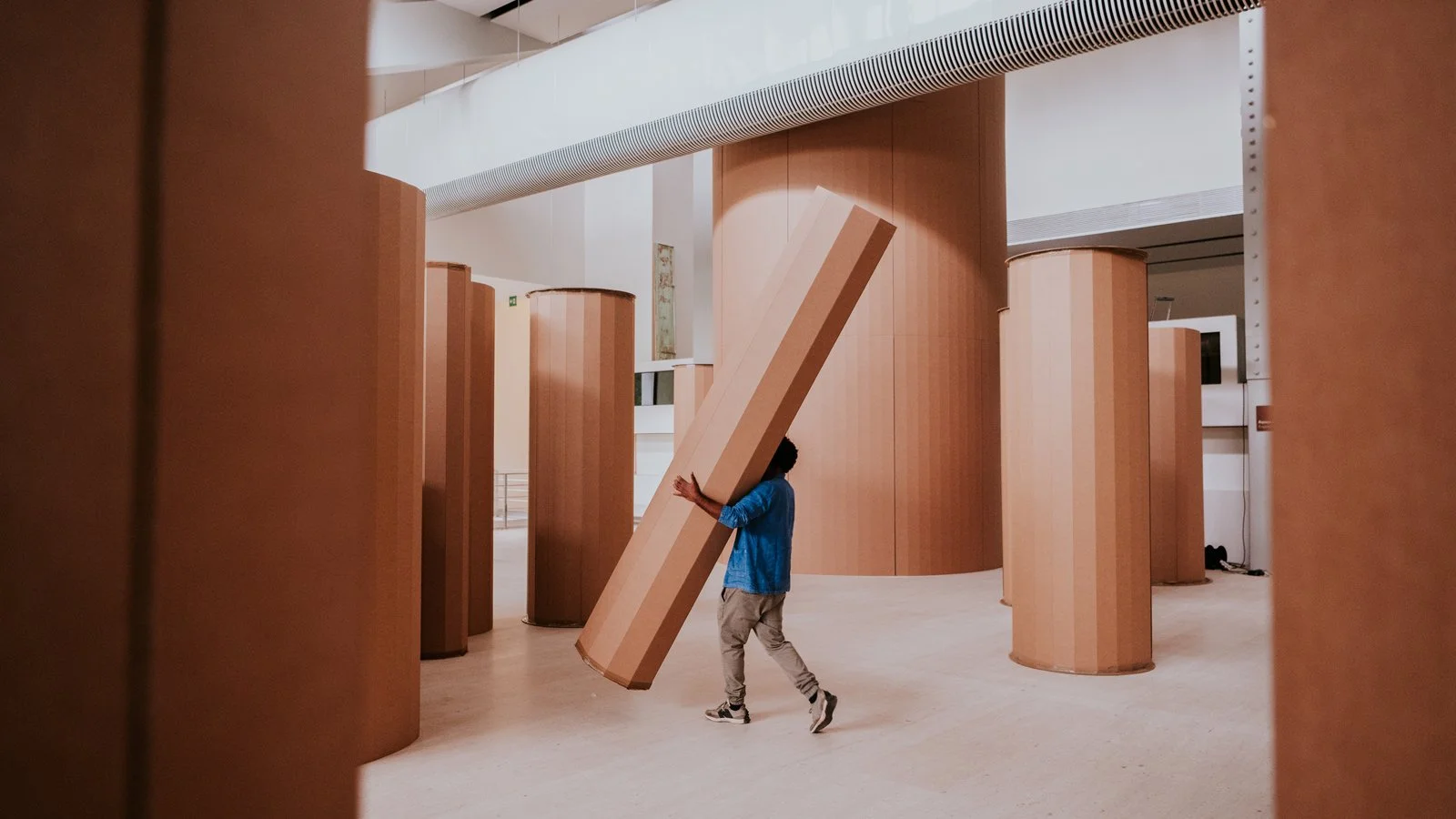
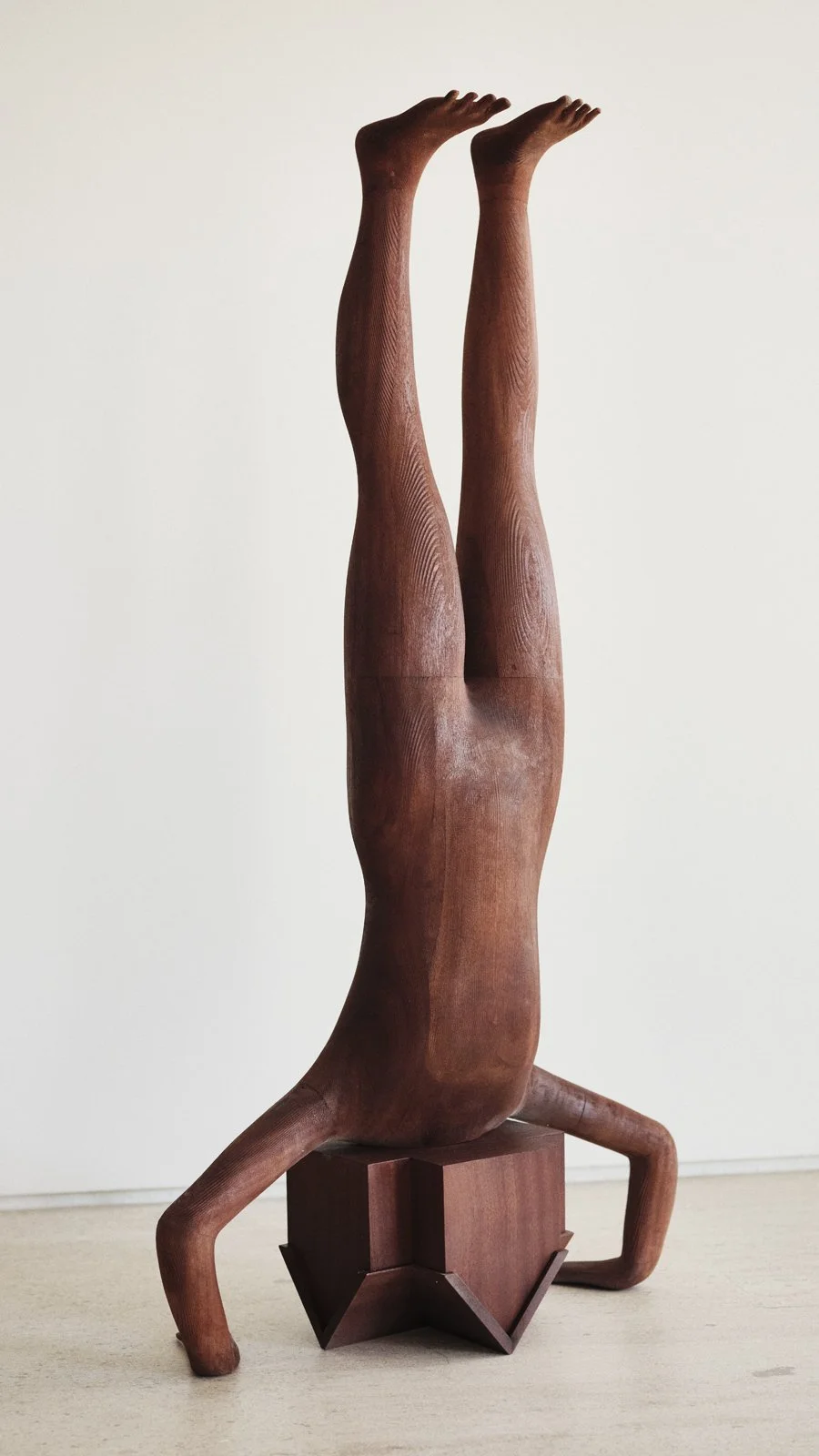
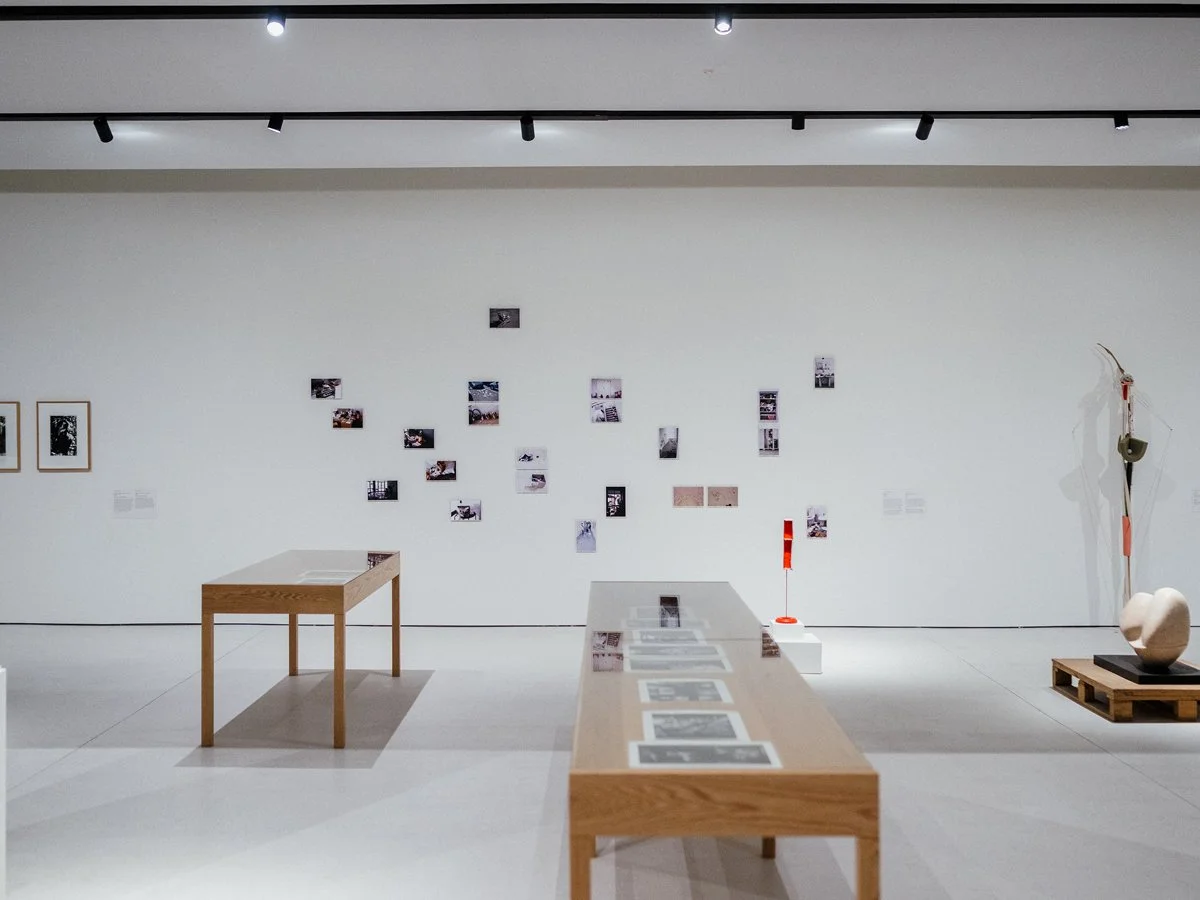
Exhibition setup. Photos: Fábio Cunha
Centro de Arte Moderna Gulbenkian +info
This is one of Bunga’s most complex and personal exhibitions to date, with his largest site-specific cardboard installation, which includes works from the CAM Collection. Working with provisional materials – cardboard, paint, and tape – Bunga’s most recognized projects reinterpret the architectures he is invited to engage with at full scale. Works such as Ruin (2008), Landscape (2011), Chapel (2015), Home (2022) and now Bosque [Forest] (2025), trace this evolution and the artist’s nomadic paths. Materially fragile yet structurally sound, and intentionally destined for transformation, these works echo the ever-changing nature of built and organic environments and the enduring search, across species, for a space, a place, or a community to return to.
This exhibition originates from one of Bunga’s surreal drawings: My First House Was a Woman, 1975 (2018). It depicts a pregnant figure with a house for a head, limbs rendered as both human and animal-like, and a colonial-era stamp crossing the torso. Referencing his mother’s abrupt passage from Angola to Portugal, the artwork is a personal point of departure. Like life itself, the exhibition expands outward into a multifaceted experience shaped by remembrance, change, and the convergences of home, body, mind, and universe.
Within CAM’s multiple galleries and the surrounding garden, architectural interventions merge with found materials and painterly gestures. Movement, ephemera, and selections from the institution’s archive and collection layer the exhibition into a meditation on absence and reinvention, and on the complexity of holding multiple, often conflicting truths at the same time.
VIEWS OF THE EXHIBITION


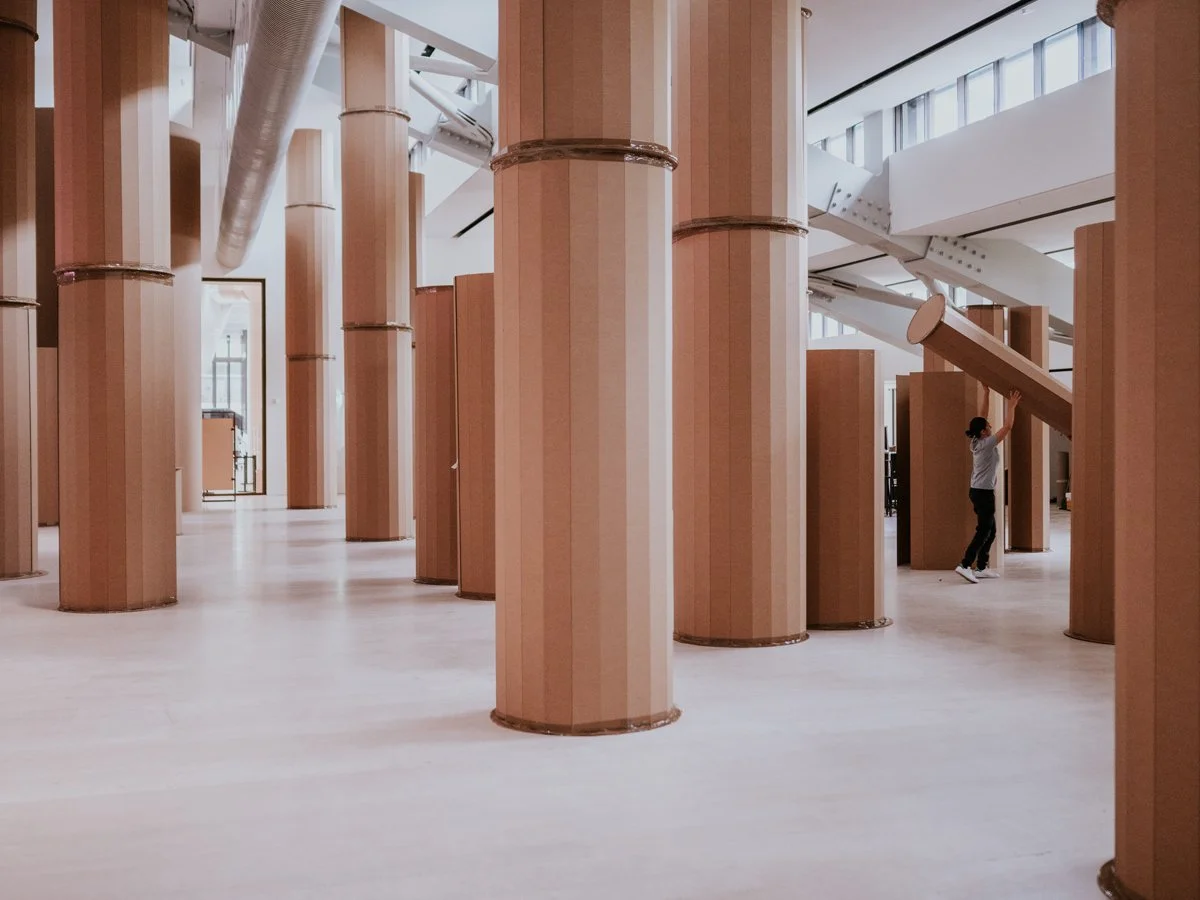
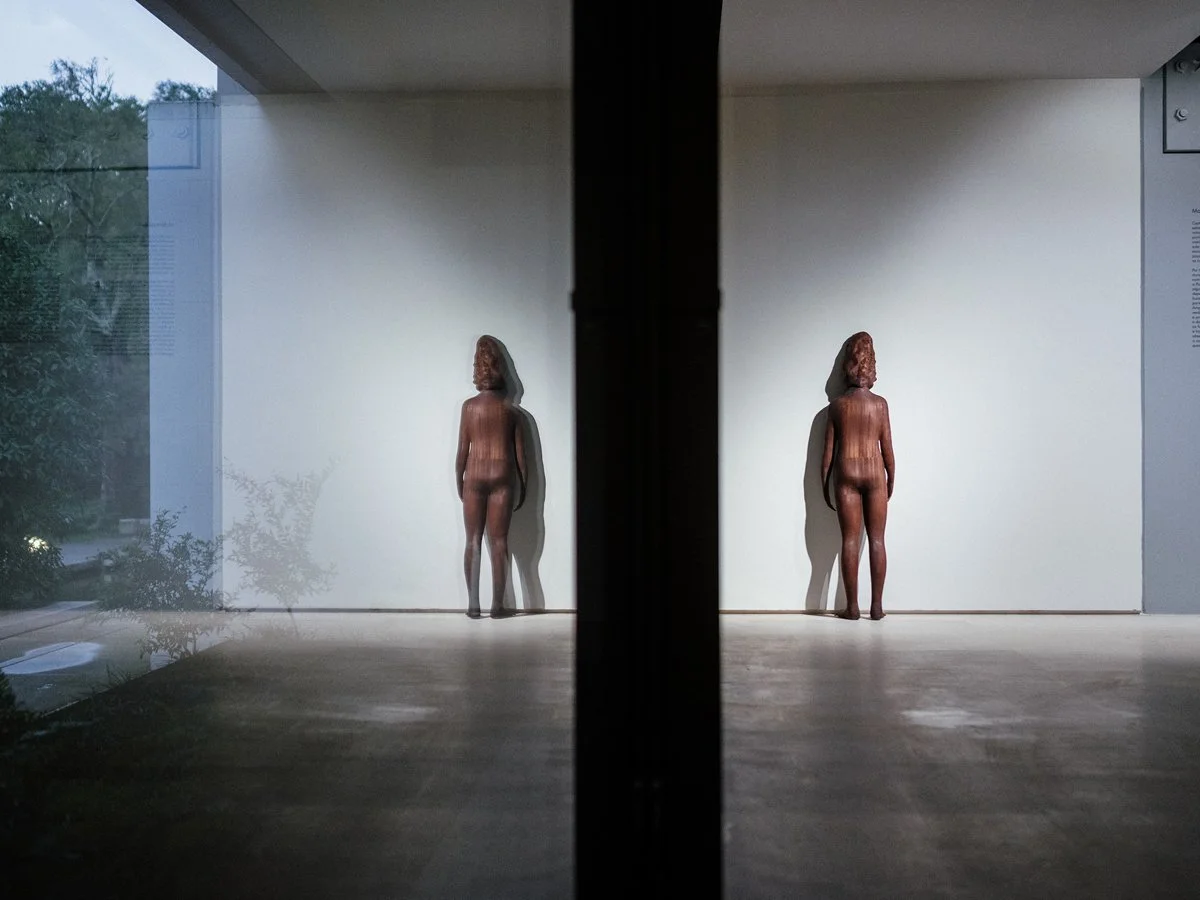


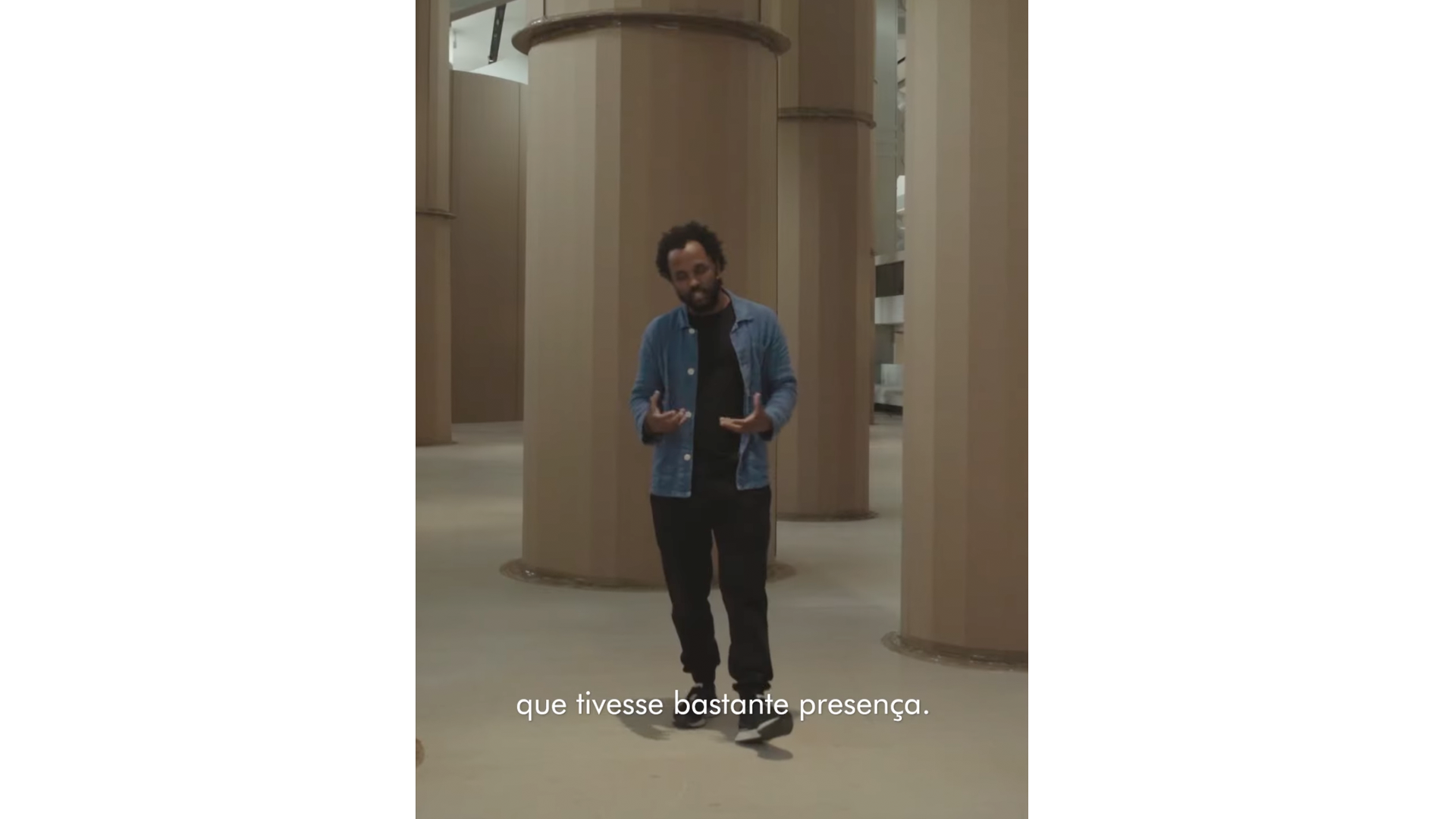
PROCESS


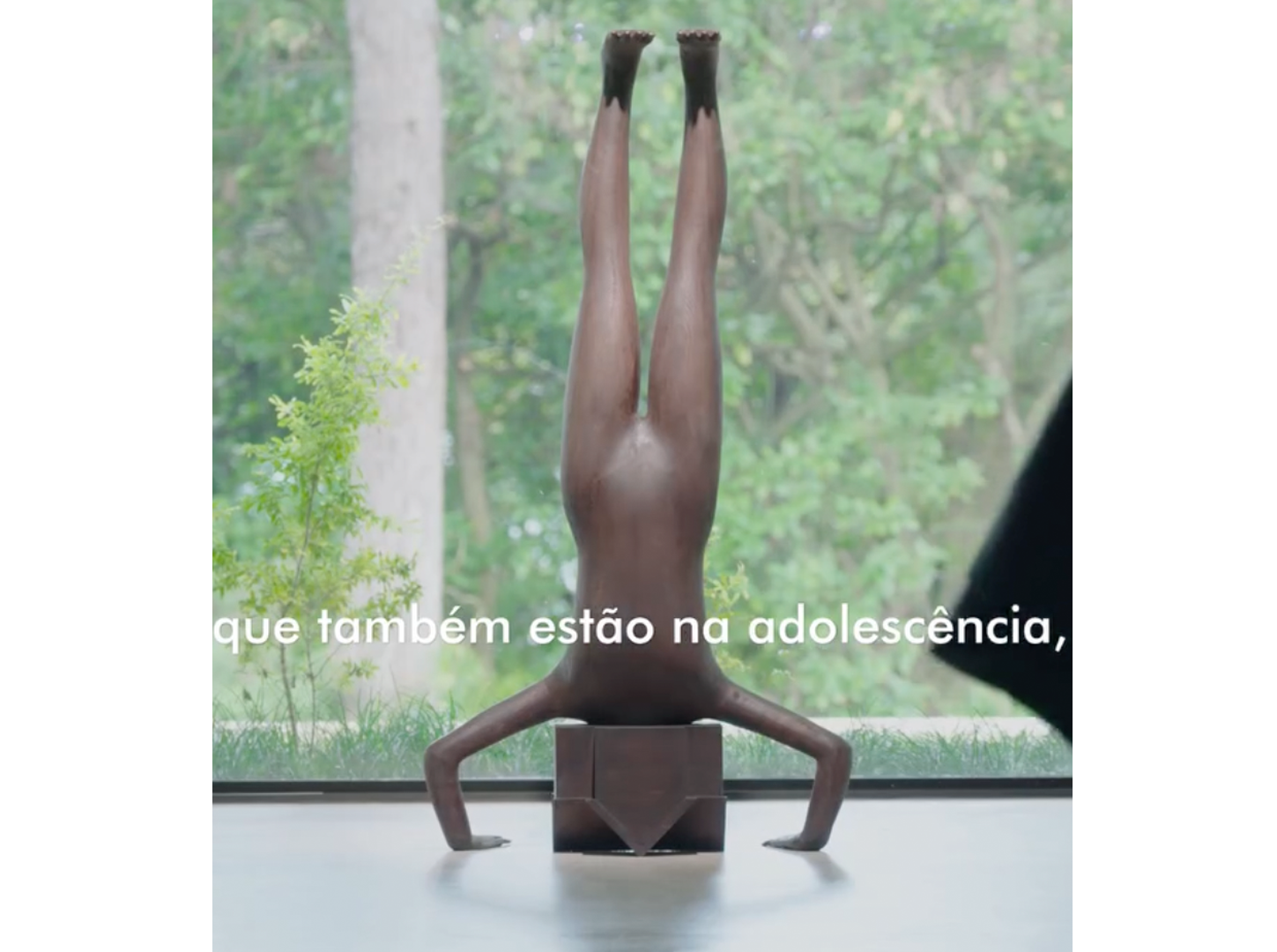
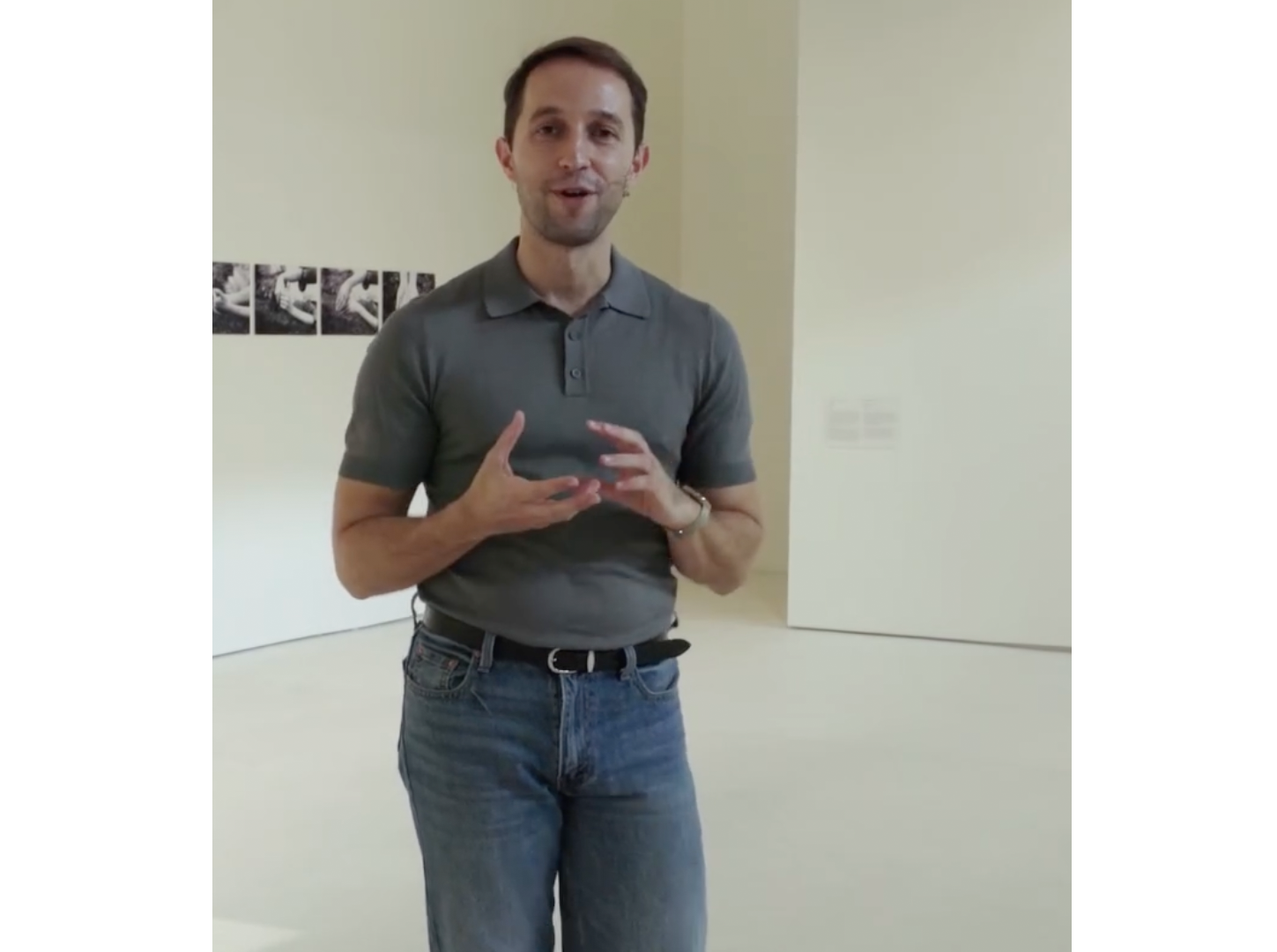
Carlos Bunga and curator Ruis Mateus Amaral reflect on Bunga’s Bosque (Woods) and show the process of putting this new installation together.
PERFORMANCE: TRANSFORMATION (FOREST)
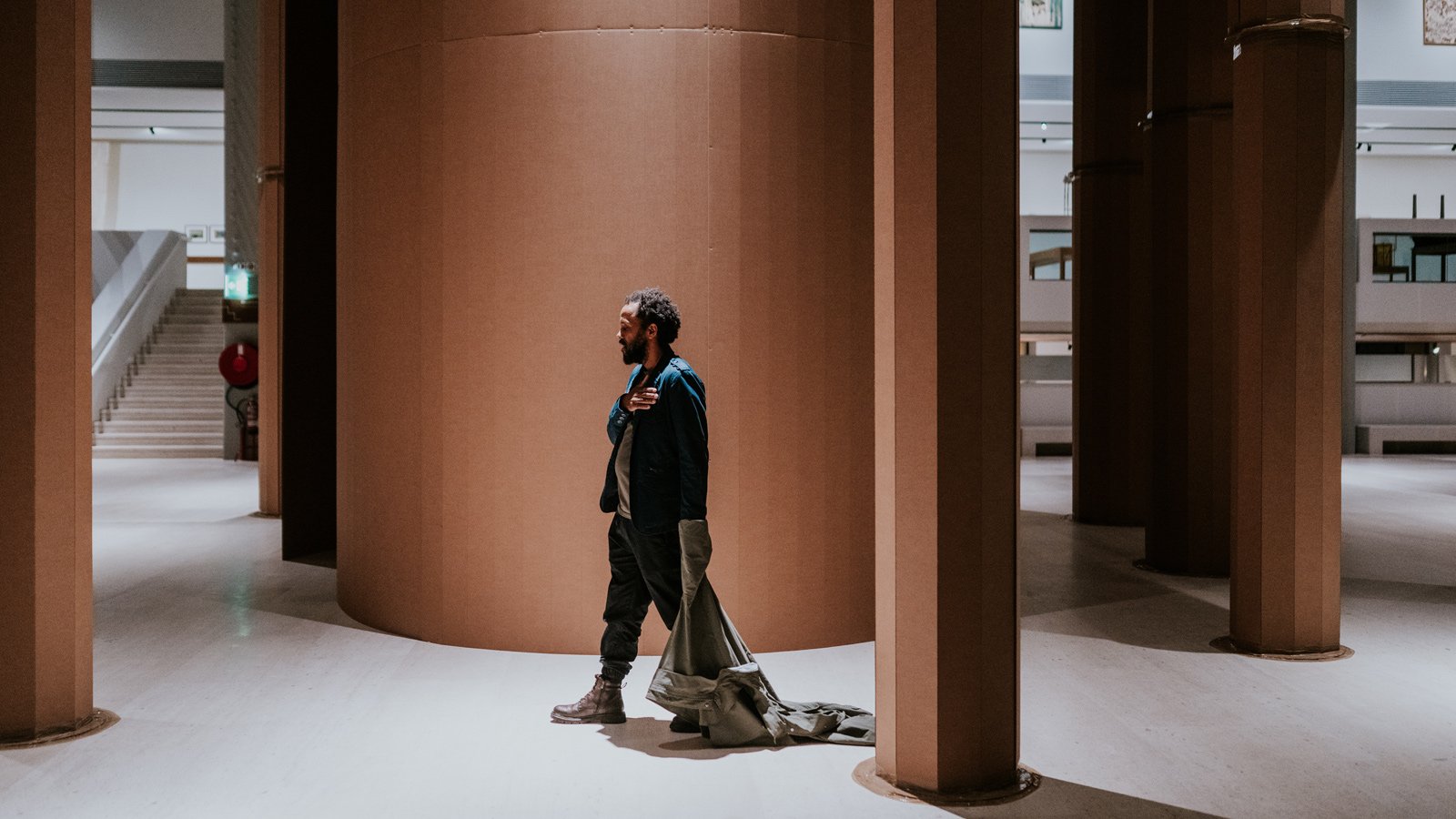
Bunga returned after 4 months of the inauguration for a radical and transformative gesture: dismantling, collapsing, reconfiguring, and reorganising Bosque (Forest), his site-specific installation for the exhibition.
Conceived as a choreography between the inside and the outside, the exhibition manifested itself both in the way the works were installed in the space and in the way the public moves through it. For about an hour and a half, Bunga cut and teared Forest, subjecting the forms and composition to chance and the force of gravity. Just as the construction of the work was improvised, its deconstruction also took place under unpredictable conditions.
Largely collapsed, the installation will no longer be what it was: after being cut, folded and knocked to the ground, a new landscape, a new architecture will emerge. The exhibition will thus open up to unexpected perspectives and renewed energies, remaining as a memory of itself.
Over the past twenty-five years, transformation has been not only a theme in Carlos Bunga’s work, but a core aspect of his artistic process. The artist questions the authority of society’s permanent and predictable structures, developing an institutional critique that extends to his own work, from a nomadic perspective. In an exhibition that encompasses both the brutality and the poetry of being alive, it is natural that the project itself should undergo a process of metamorphosis.
This performance marks the culmination of multiple transformations. For Bunga, the exhibition and collection are understood as a living organism, a continuous choreography; the museum, as a permeable place. Since its inauguration on 7 November 2025, when former dancers from the Calouste Gulbenkian Foundation returned to dance with other bodies and other ages, until the Anniversary of Art, celebrated on 17 January 2026, inspired by Robert Filliou’s idea for the ‘1000011th Anniversary of Art’ (conceived in 1963 and celebrated for the first time in Portugal in 1974), CAM has become a large public house, with events inside and outside its walls. Over the course of these months, the works were altered, moved, removed and reintroduced.
On 14 March, Carlos Bunga returned for a performance open to the public, transforming the space into a participatory event. For the artist, change is a vital principle: something that continually reinvents itself and flows. Its origin is sought in nature, a territory of transit and thought, where life and death coincide and complement each other, functioning simultaneously as a metaphor for life itself.
This action takes the form of a choreography, a dance and a collective orchestra of different bodies, with the participation of Ricardo Pinto (trumpet) and dancers Sylvia Rijmer, Bernardo Gama, Rui Reis, Paula Valle Sabino and Ana Caetano.
ANNIVERSARY. ENCOUNTERS TO CELEBRATE ART AND LIFE
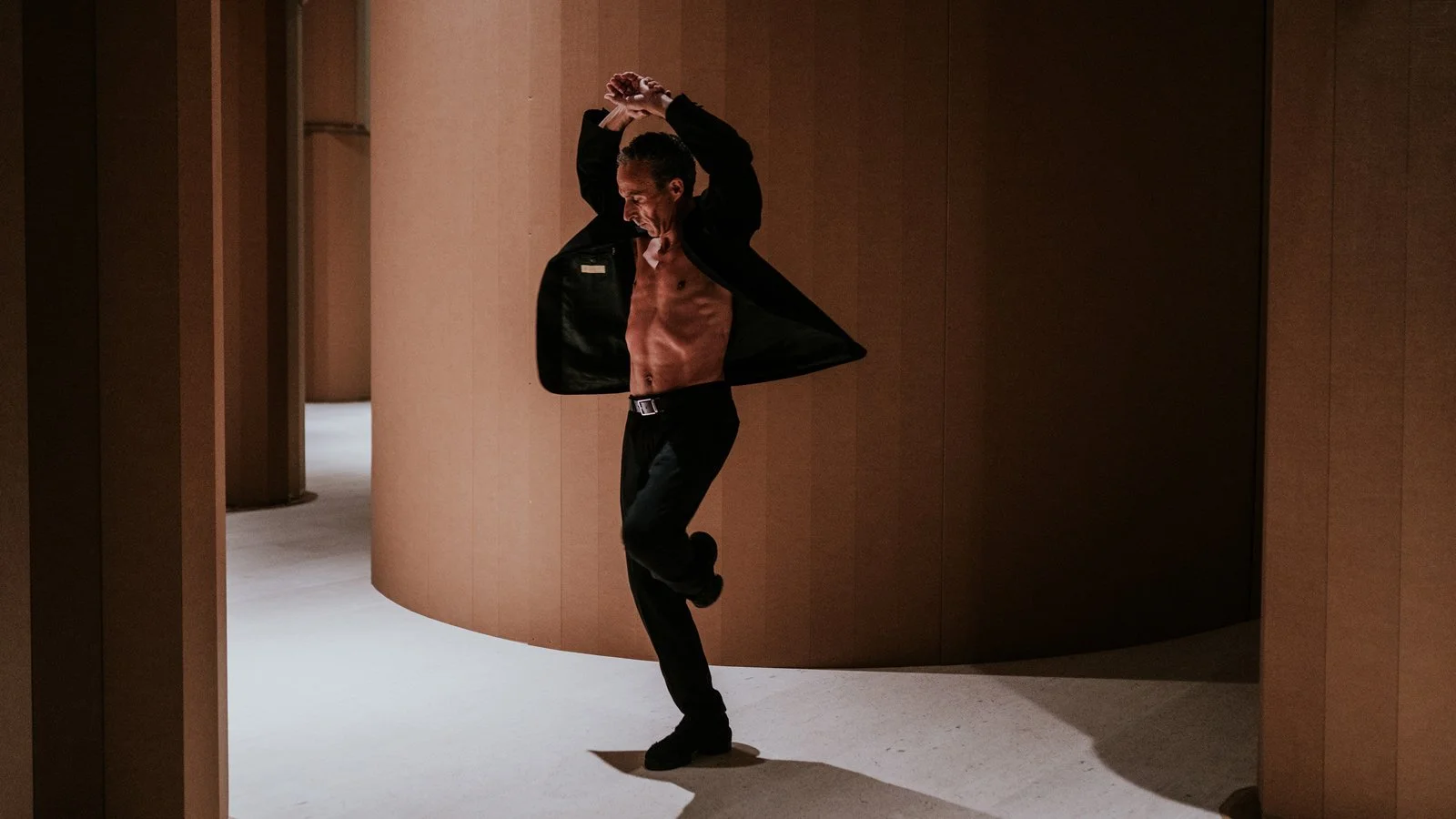
In the context of this exhibition, the CAM organized the event Anniversary, inspired by the event “1000011th Anniversary of Art” on 17 January 1973, organised by Ernesto de Sousa in collaboration with the Círculo de Artes Plásticas de Coimbra, and based on an idea by Robert Filliou from 1963, we will celebrate art and life. Some of the activities were listening to music, readings, and sharing hot cocoa. Bunga also invited former dancers from the Gulbenkian Ballet to return to the institution to respond, through movement, to his installation Forest.
THE WORLD IS OUR HOUSE
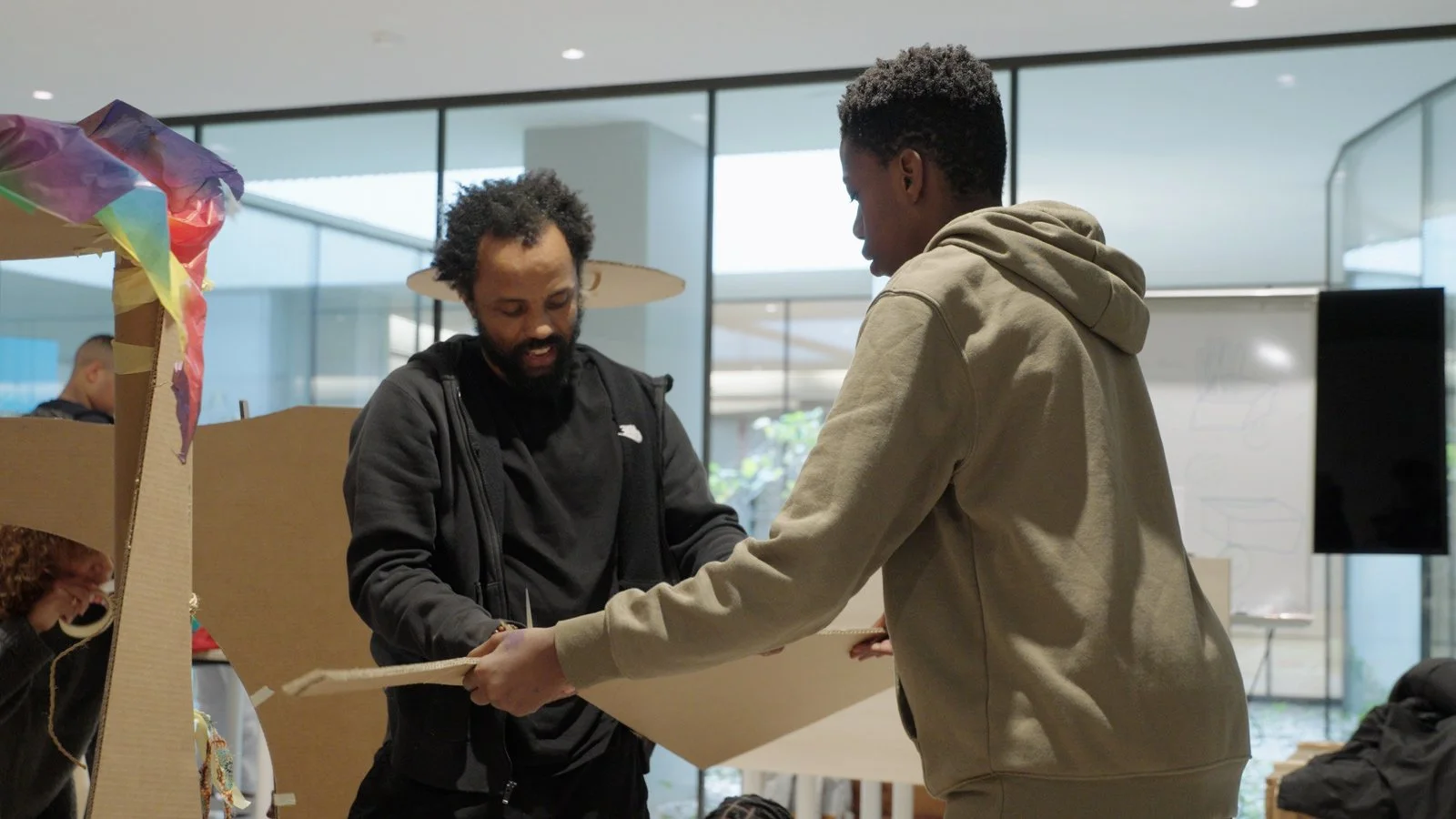
O Mundo é a Nossa Casa (The World Is Our House) is a participatory project developed by artist Carlos Bunga in the context of this exhibition, with young people aged between 11 and 20 from the Zambujal neighbourhood in Alfragide, Amadora, who are part of the Percursos Acompanhados E9G programme, promoted by CooperActiva – Cooperativa de Desenvolvimento Social.
In this project, which expands the collaborative space for collective construction in places of education, mediation, and artistic creation, we start from the power of art to think about the world as we know it. Between education and artistic practice, the experience was constructed as a space for amplifying the concerns, desires, and questions that resonate within those growing up in a world that is simultaneously promising and fractured.
This exhibition originates from one of Bunga’s surreal drawings: My First House Was a Woman, 1975 (2018). It depicts a pregnant figure with a house for a head, limbs rendered as both human and animal-like, and a colonial-era stamp crossing the torso. Referencing his mother’s abrupt passage from Angola to Portugal, the artwork is a personal point of departure. Like life itself, the exhibition expands outward into a multifaceted experience shaped by remembrance, change, and the convergences of home, body, mind, and universe.
TALKS
Curator Ruis Mateus Amaral reflects on Bunga’s “Nomads” and the dialogue between the exhibition and CAM’s permanent collection.
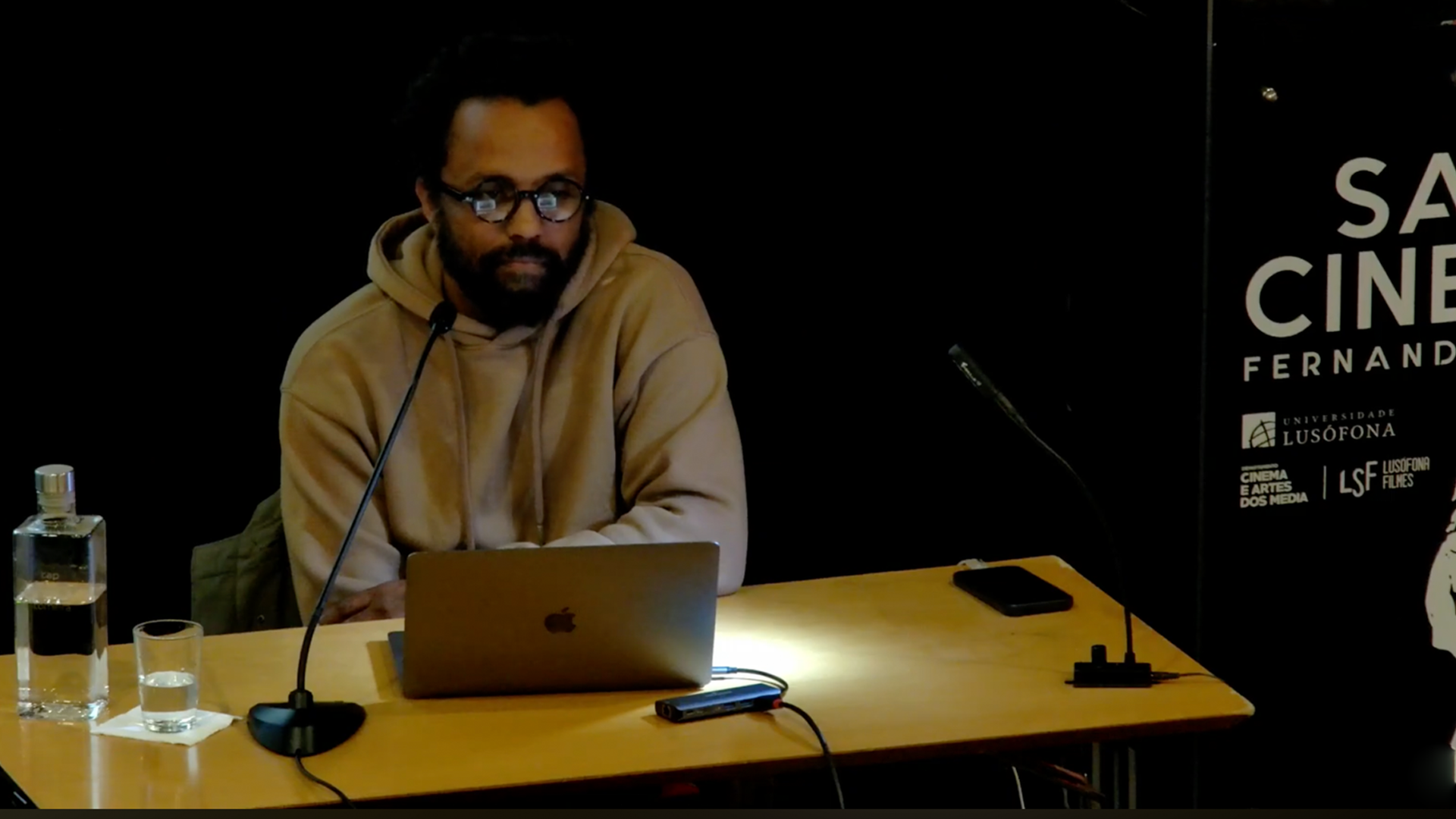
Bunga was a guest speaker at the Universidad de Lusófona for the series Great Artists On Campus, giving insights on the exhibition.
Curator: Rui Mateus Amaral
2025. Lisbon, Portugal.
